
 By Mukesh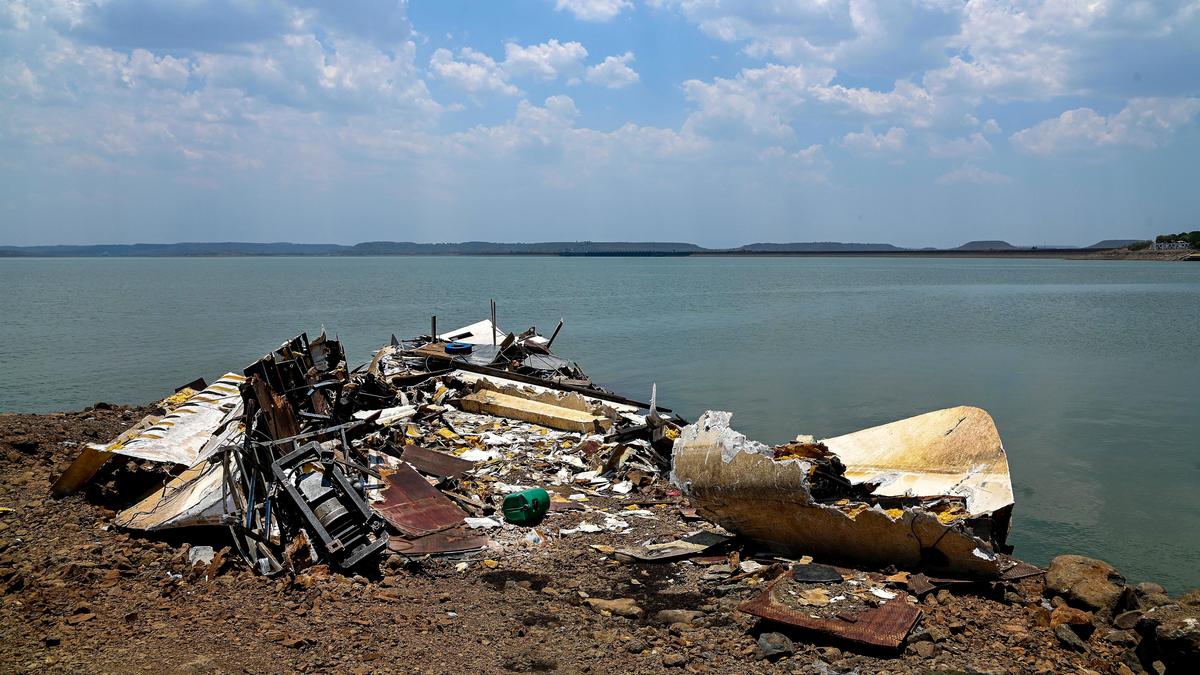
April 30 was a sweltering summer day in Madhya Pradesh, with the temperature crossing 40 degrees Celsius. So, when clouds gathered over the Jabalpur sky and a light breeze swept through the city that afternoon, people planned outings to nearby parks and lakes.
Several families decided to head to the Bargi dam reservoir on the Narmada river, about 40 kilometres from Jabalpur. For nearly three decades, this has been a popular destination for locals and tourists alike. Boat and cruise rides are operated by the Madhya Pradesh State Tourism Development Corporation (MPSTDC) at the Bargi Boat Club.
“I have been going there for more than 20 years and my family loves boating and going on cruise rides,” says 72-year-old Riyaz Hussain Sayyed. “Whenever I have family or friends visiting, I take them there.”
Sayyed’s latest cruise ride, however, has left him with trauma that he says will stay with him forever. That windy afternoon, as passengers were enjoying the change in weather, a storm suddenly intensified and huge waves lashed against the vessel, which capsized within minutes.
Sayyed watched helplessly as his 66-year-old wife, Reshma, disappeared into the water. His daughter’s mother-in-law, Shamim Zaidi, 68, also died. “I just waited for death quietly. I heard a man’s voice on the other side of the boat. He was also trying to get out, but he soon became silent,” he recalls.
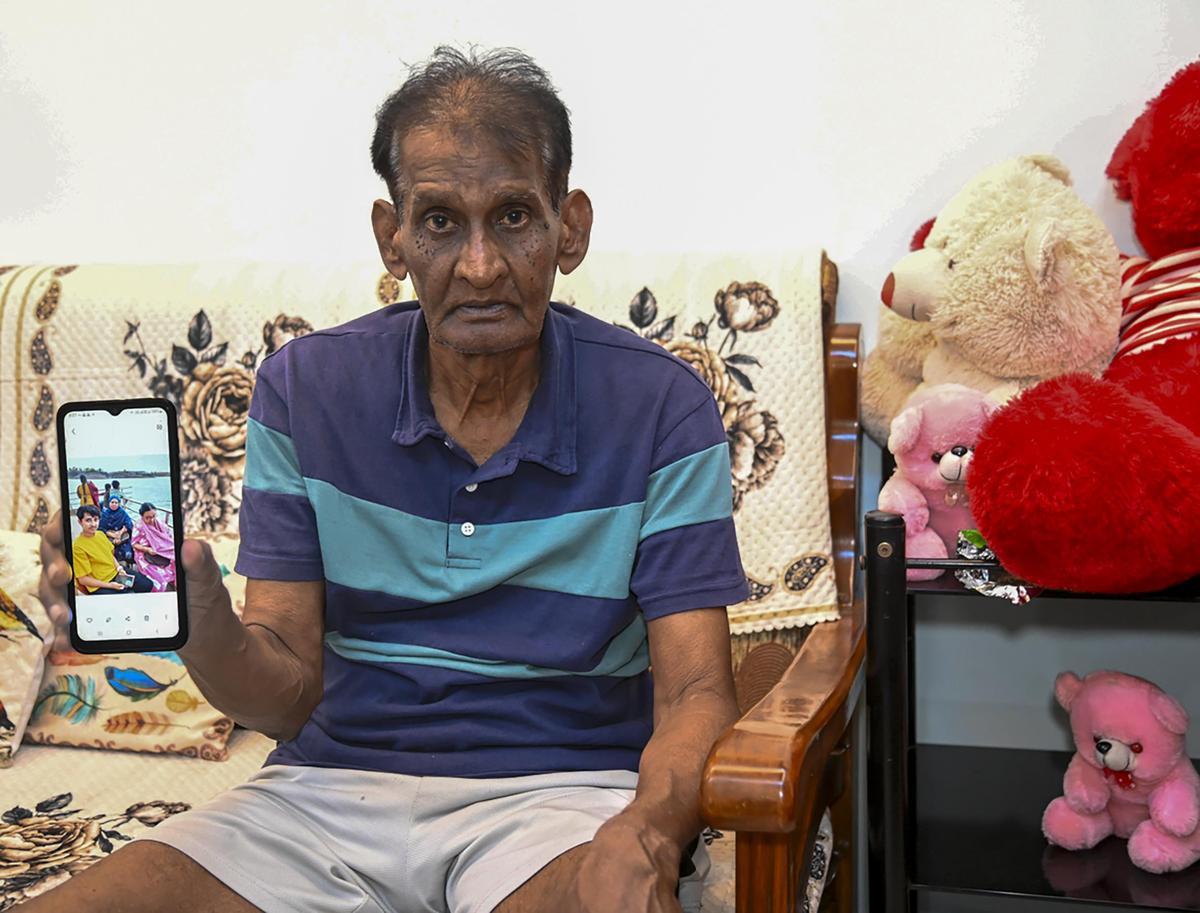
Riyaz Hussain Sayyed, 72, a survivor of the Jabalpur cruise tragedy, shows a photo he took of his family members on the deck of the vessel just a few minutes before the tragedy.
| Photo Credit:
A.M. Faruqui
Clinging to a small grill, Sayyed managed to breathe through a narrow gap for more than four hours, surrounded by violent water and an eerie darkness. He began shouting when he saw lights towards the shore and was rescued more than an hour later by construction workers and officials, who had to break part of the vessel to reach him.
Of the 39 passengers and two crew members who embarked on the last cruise ride that day around 5.20 p.m., 13 people, including eight women and four children, drowned. The rest were rescued by workers of a nearby private construction company, along with rescue teams that arrived shortly after. The incident occurred about 100 metres from the shore.
Trapped beneath the river
Over the past week, several videos of the incident have emerged online, providing glimpses of the tragedy. One clip captures the moments just before the boat overturned, with two men tearing open life jacket packets while others remain inside an already flooding cabin. Another shows survivors floating in the water, trying to reach the shore amid high waves.
Survivors and officials say that those who managed to jump out of the cruise from the deck or through windows survived the tragedy, while most of the passengers trapped beneath the vessel died, as the life jackets were unable to bring them to the surface.
Marina Messi, 39, along with her husband Pradeep, two children — Siya and Trishaan — and her parents had come to Jabalpur from the Delhi cantonment area to attend a family function on April 29. Before their return, they decided to take the cruise. Three members of the family are dead: Marina’s 62-year-old mother, Madhu Messi; Marina, who was found trapped beneath the vessel in a life jacket, and her four-year-old son Trishaan, whom she was embracing.
Julius Messi, Marina’s 65-year-old father, says, “Everything transpired within minutes so nobody had time to react.”
Most families have expressed anger over the lack of preparedness on the cruise in the event of an emergency, while also alleging negligence on the part of the crew. Cruise operator Mahesh Patel and boatman Chhotalal Gond are facing the most ire as survivors allege that they were of “no help” during the tragedy.
They also allege that the passengers were not given any instructions before the ride on how to respond in case of an emergency, and that there were no jackets for children.
Julius explains what happened when the situation turned bad: “Pradeep and I started distributing life jackets to the passengers. There was no help from the crew. Some people could not get jackets, while some could not wear them properly. Since we could not find a kids-sized jacket, my daughter covered Trishaan in her jacket. I got out to look for a way to escape, but before I could return, the boat overturned and Marina and my wife got stuck in the lower portion of it.”
Rakhi Soni, 41, lost her sister, Neetu Soni, 43, and her four-year-old nephew, Viraj. Seven members of the family, all residents of Jabalpur’s Kotwali area, had gone for an outing to experience the breezy weather. Viraj’s body was found on the last day of the search operation on May 3.
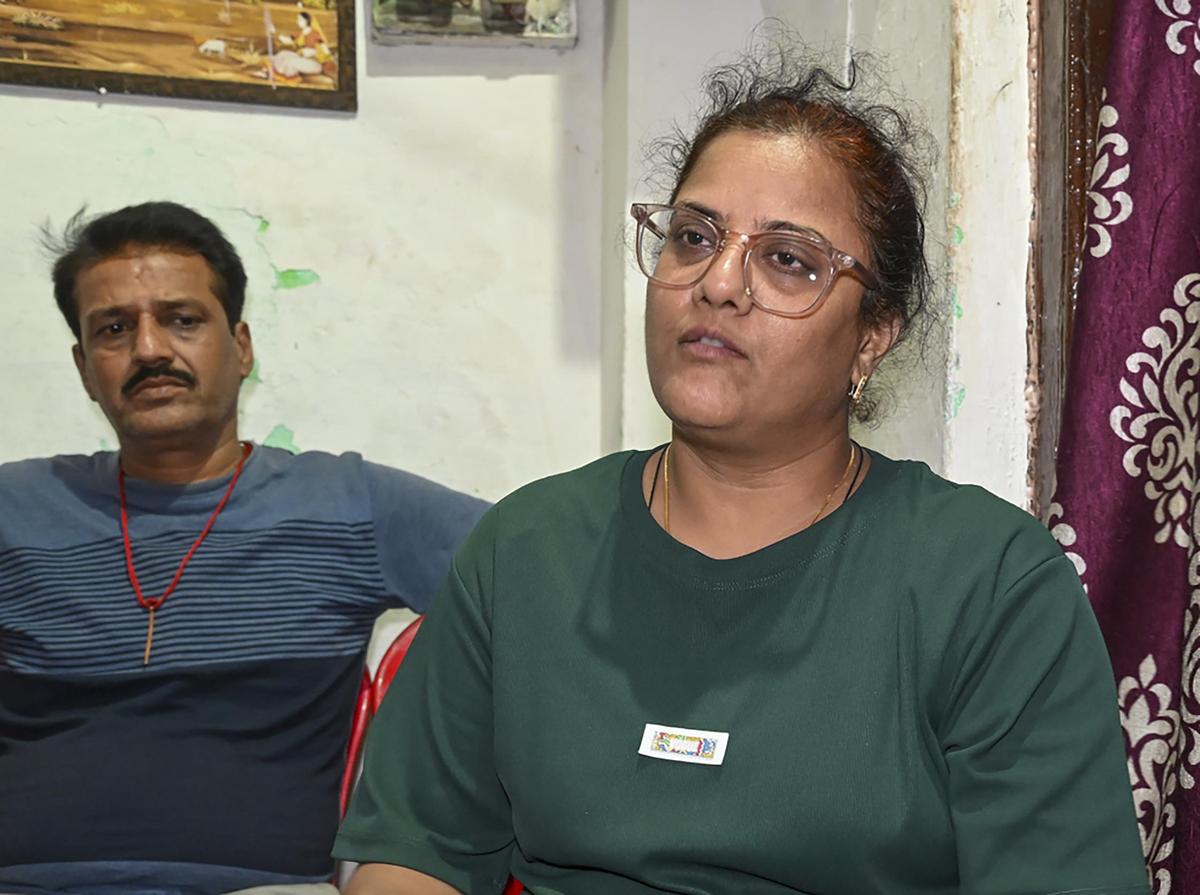
Rakhi Soni, 41, at her home in Jabalpur’s Kotwali area days after losing her sister Neetu Soni and her nephew Viraj in the tragedy.
| Photo Credit:
A.M. Faruqui
“We kept hoping and praying that he might have somehow reached the shore and been rescued by locals, but that hope was eventually shattered,” says Rakhi. “My sister had separated from her husband and was working at a private bank to support her child. She wanted him to become an Air Force pilot and had enrolled him in an Army school.”
Rakhi also says that there was no immediate help from the Boat Club or any authorities, and that she along with many others swam about 100-150 m to reach the shore.
“Some locals and construction workers kept guiding us by yelling. They told us how to move our arms and legs to help us swim. We managed to get life jackets but that was not enough. There were no instructions. The authorities cannot just throw jackets at us at the last minute,” she says.
Ramzan Sheikh, 22, a migrant labourer from West Bengal’s Murshidabad, was among the first to spot the sinking vessel from a construction site near the shore. “A colleague was shooting a video of the dam when he spotted the ship. We immediately reached the shoreline (marked by a cliff about 25 feet high) but we had no clue what to do. The weather was really bad,” he says.
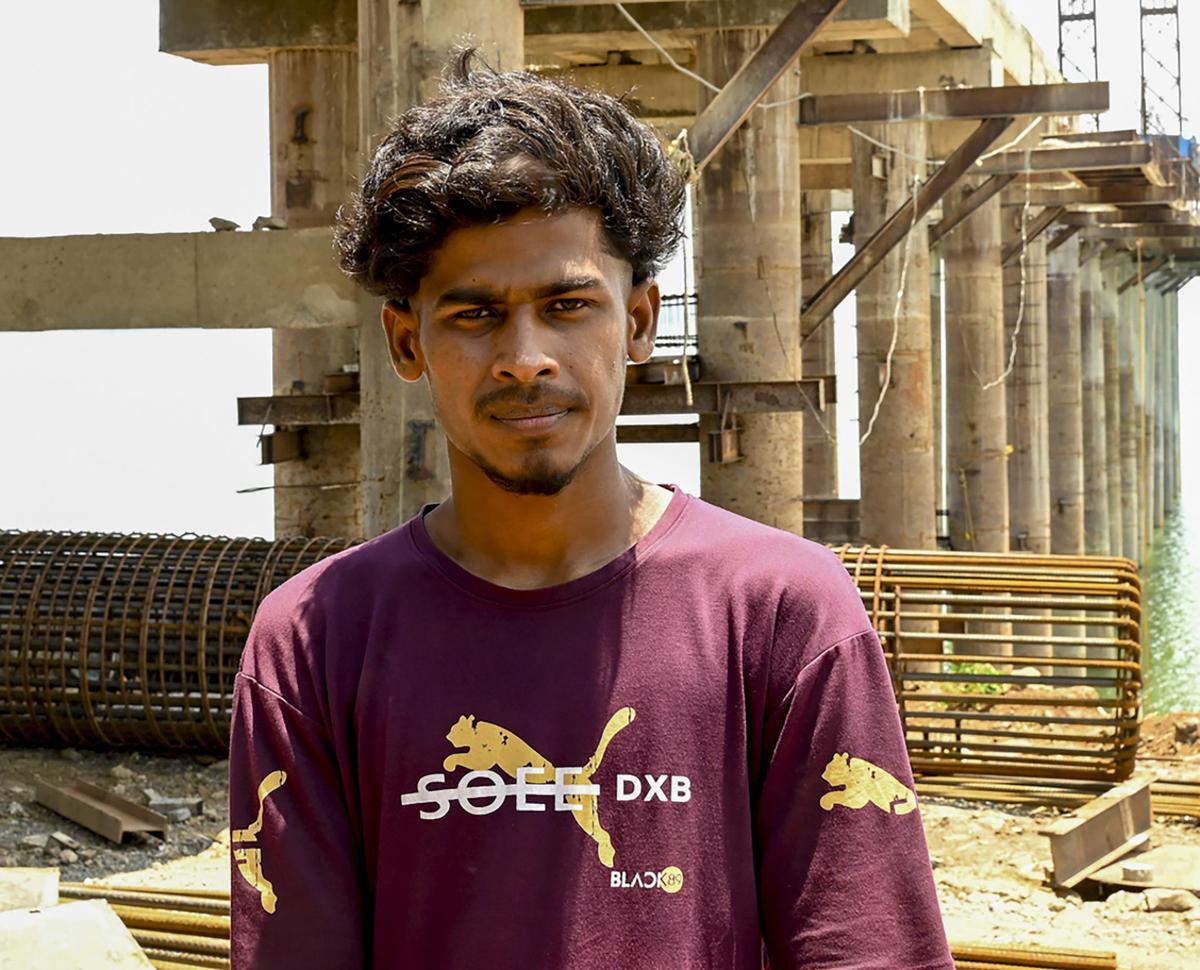
Ramzan Sheikh, 22, a migrant labourer from West Bengal’s Murshidabad, was among the first to spot the sinking vessel from a construction site near the shore.
| Photo Credit:
A.M. Faruqui
Ramzan and his colleagues initially guided the passengers by shouting instructions and helped them navigate their way towards the shore by throwing ropes. About half an hour later, as the first responders from the Boat Club arrived, he along with a few others jumped into the cold water wearing life jackets, along with the rescuers.
“When we spotted a man [Riyaz] stuck under the ship, two locals and I entered the water with the rescuers. We used some of our construction tools to break that part of the ship and got him out,” he says.

A challenging operation
While rescuing the survivors was challenging enough due to persisting winds, high waves, and the overturned cruise that had trapped some, recovering the bodies proved to be a tougher task. It forced the authorities to carry out searches in large areas of the reservoir for nearly three days until the last body was found on May 3 morning.
The rescue operation involved special divers of the Indian Army, called in from Uttar Pradesh’s Agra and Telangana’s Hyderabad; personnel of the National Disaster Response Force and State Disaster Emergency Response Force; local police and home guard; as well as local fishermen. Heavy machinery and equipment such as cranes and excavators were used to pull the vessel out of the water and look for people trapped under it
Madhya Pradesh Chief Minister Mohan Yadav deployed ministers and senior officials to oversee search and rescue efforts. He visited the spot on May 1 and ordered a high-level investigation into the incident. He formed a four-member committee, headed by the Additional Chief Secretary (Home), and directed it to submit its report within 15 days. The State and Union governments also announced financial assistance for the victims’ families, while Yadav said that workers and locals who assisted in the rescue would be rewarded.
The services of cruise operator Assistant Skipper Patel and boatman Gond, who were onboard, as well as ticket counter in-charge Brijendra, were terminated for negligence during and after the tragedy. Sunil Maravi, manager of Hotel Maikal Resort and Bargi Boat Club, was also suspended for negligence, while MPSTDC regional manager Sanjay Malhotra was attached to the headquarters and a departmental inquiry was initiated against him. The operations at the boat club remain suspended.
A local court in Jabalpur took suo-motu cognizance of the tragedy. Taking note of media reports that alleged that Patel “abandoned” the passengers and escaped, the court directed the local police to lodge a case against him and other concerned persons.
Officials also say that a lack of communication from the crew and the ticket counter in-charge after the tragedy led to confusion during the rescue efforts. “After getting out of water, they did not inform the authorities about the number of passengers onboard,” says a senior government official. “A total of 29 tickets were sold for the ride, and 10 others were allowed as complimentary entries. While this is the standard practice for children, the lack of communication led to confusion during the rescue operation. We only calculated the actual numbers by looking at CCTV footage.”
On May 7, officials of the district administration recorded the statements of the survivors, eyewitnesses and the crew, as part of the Chief Minister-ordered investigation.
Patel denies all the charges and claims that he was the last one to jump out of the cruise. “There were no winds when we started the journey and it got stormy all of a sudden. As the winds grew stronger, I started turning back the vessel but two back-to-back strong waves hit the vessel and it started overturning mid-turn. Before that I had asked the boatman to distribute the jackets kept in a storeroom,” says Patel, a resident of Ghullapaat village near the dam.
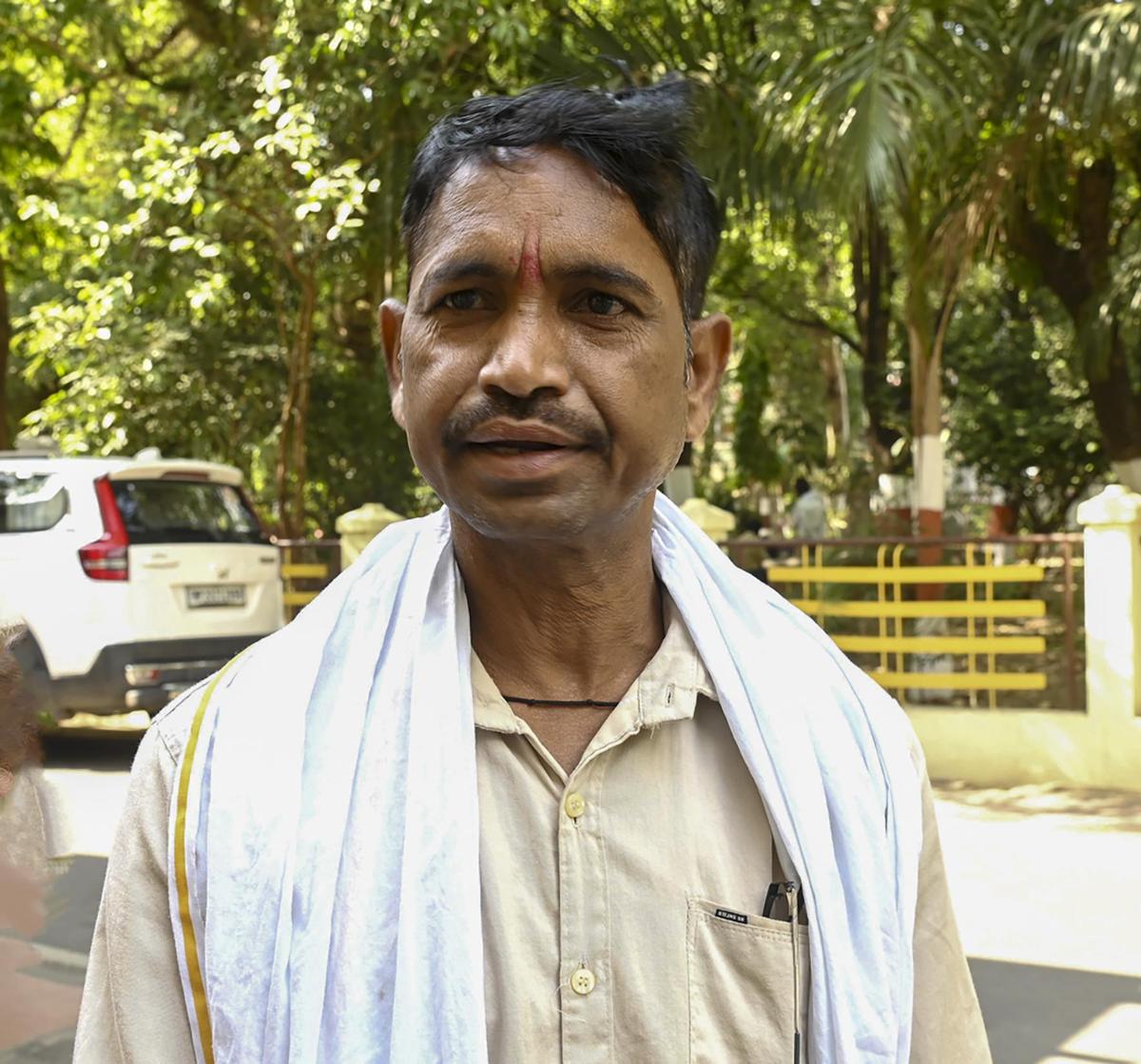
Mahesh Patel, operator of the cruise boat that capsized in the Bargi dam reservoir in Jabalpur.
| Photo Credit:
A.M. Faruqui
Patel joined the Boat Club as a boatman in 2009 and has been operating the cruise since 2014 after becoming an Assistant Skipper. “We have never been responsible for giving instructions before passengers come on board, and nobody ever told us it was required. We have been operating the cruise for years, and this has been the standard practice,” he says.
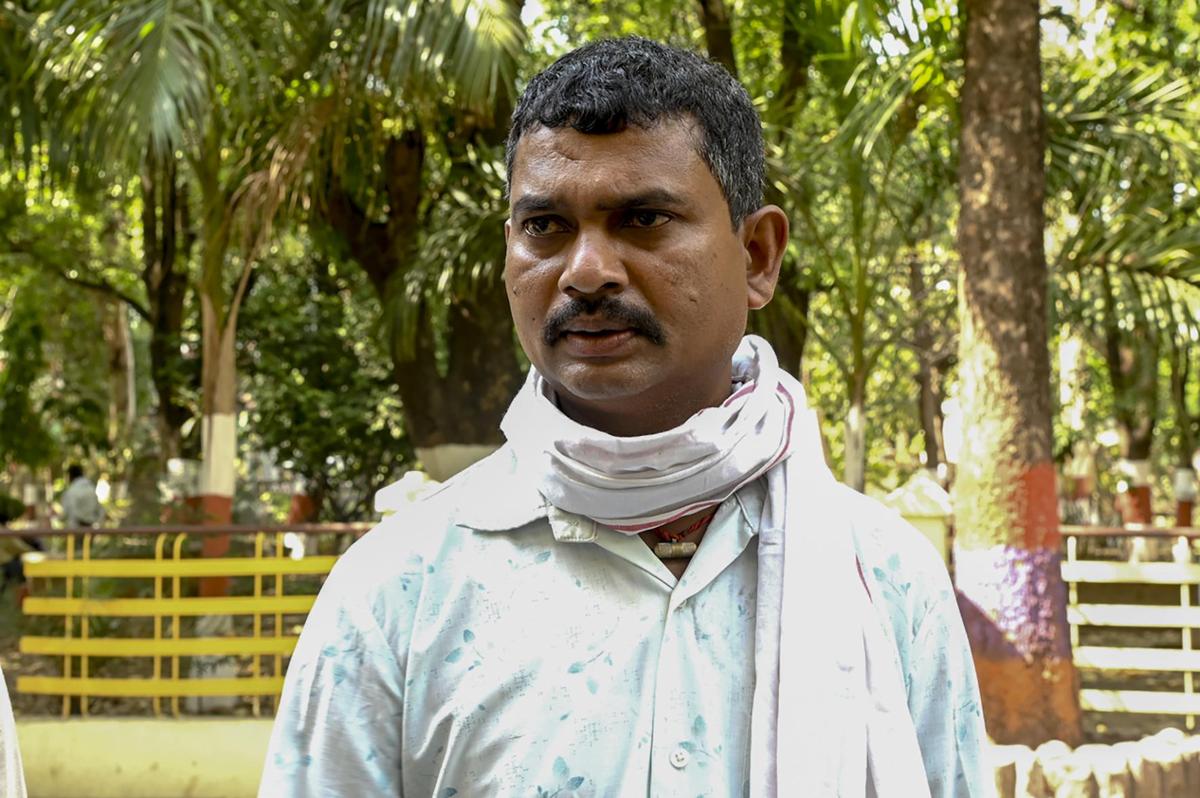
Chhotelal Gond, boatman of the cruise boat.
| Photo Credit:
A.M. Faruqui
The boatman, Gond, says everyone was in a panic. He says he was trying to calm the passengers and distribute life jackets. “There was very little time so we did whatever we could,” he says.
A group of boatmen and operators from the Bargi Boat Club also submitted a complaint to Jabalpur Collector Raghvendra Singh saying that the confusion in the number of passengers is often caused by VIPs and their guests who come without tickets, and that there were some onboard even that day
Dismantling the vessel
Several questions have also been raised about the vessel’s condition and whether it was fit to sail in adverse weather. Survivors have criticised the authorities’ decision to dismantle it just days after the tragedy and before the investigation was completed, raising suspicions about the possible loss of crucial evidence.
A twin-hull catamaran cruise boat, the vessel was purchased in 2006 from a Hyderabad-based firm which has also been responsible for its maintenance and repair. It had a capacity of 90 passengers, according to officials. Its dismantled wreckage now lies on the shore.
Authorities, however, have denied both allegations, stating that the mechanical parts of the cruise remain at the site and that the investigation team will carry out a thorough inspection.
Singh says,“It is a 17-18 tonne vessel. It had become heavier due to water. It was broken so that it could be moved from there.”
Rajendra Nigam, a retired Indian Navy Commander, working with MPSTDC as an advisor for water and adventure tourism, says some thought there would still be a few bodies trapped in the vessel’s bays or some of its parts. “That is why they checked it completely to be sure,” he says.
Nigam also says that the vessel was undergoing maintenance regularly with the last one taking place in 2024. “Its life had increased by 10 years after the last repair. There was no technical or mechanical fault with the vessel. The cruise model had been designed by the certified naval architects at the National Ship Design and Research Centre, Visakhapatnam,” he explains.
Nigam adds that the assistant skippers and the boatmen working on the vessel received training at the National Institute of Water Sports in Goa every two years. “But this was an unprecedented situation. Nobody could do much,” he says.
Lack of protocols and enforcement
Adventure tourism activities in the State are governed by the tourism department, based on the Indian Adventure Tourism Guidelines, 2018, of the Adventure Tour Operators Association of India, approved by the Union Ministry of Tourism.
Under the subhead for river cruising, section 26.9 mandates that a “comprehensive safety briefing must be given on boarding the vessel where all emergency drills are explained/demonstrated. Pictorial demonstrations, usage of life vests, muster stations for boarding lifeboats etc must be explained in detail”.
Madhya Pradesh is yet to form and notify its own rules for inland vessels operations despite the Inland Vessels Act, to promote economical and safe transportation and trade through inland waters, being passed in Parliament in 2021. Kerala, Gujarat, and Goa, among others, have their own rules.
Officials say that before forming its own rules, Madhya Pradesh needs to establish a maritime board. “There have been discussions on the matter but a consensus is yet to be reached about whether it will be governed by the tourism or transport department. The matter has been mainly stuck due to this,” says an official. Nigam says the process is now expected to accelerate in the wake of the tragedy and that the rules “should be framed within six months.”
Experts blame lack of enforcement of rules and guidelines for slow responses and lack of preparedness during such incidents.
N. Unni, former director of the Inland Waterways Authority of India, says that in several countries, a detailed and mandatory instruction session is conducted before they let you onboard. “This is missing in our country.”
He also questions the formation of probe committees or judicial commissions in the aftermath of such tragedies. “How will a judicial commission or an official committee probe a technical subject? Sometimes, such bodies fail to finish their probe for years and the issue is forgotten unless another tragedy occurs. We need experts investigating the causes of such tragedies and we need governments, both Central and State, to act seriously on their recommendations to prevent such incidents in future,” he says.