
 By Mukesh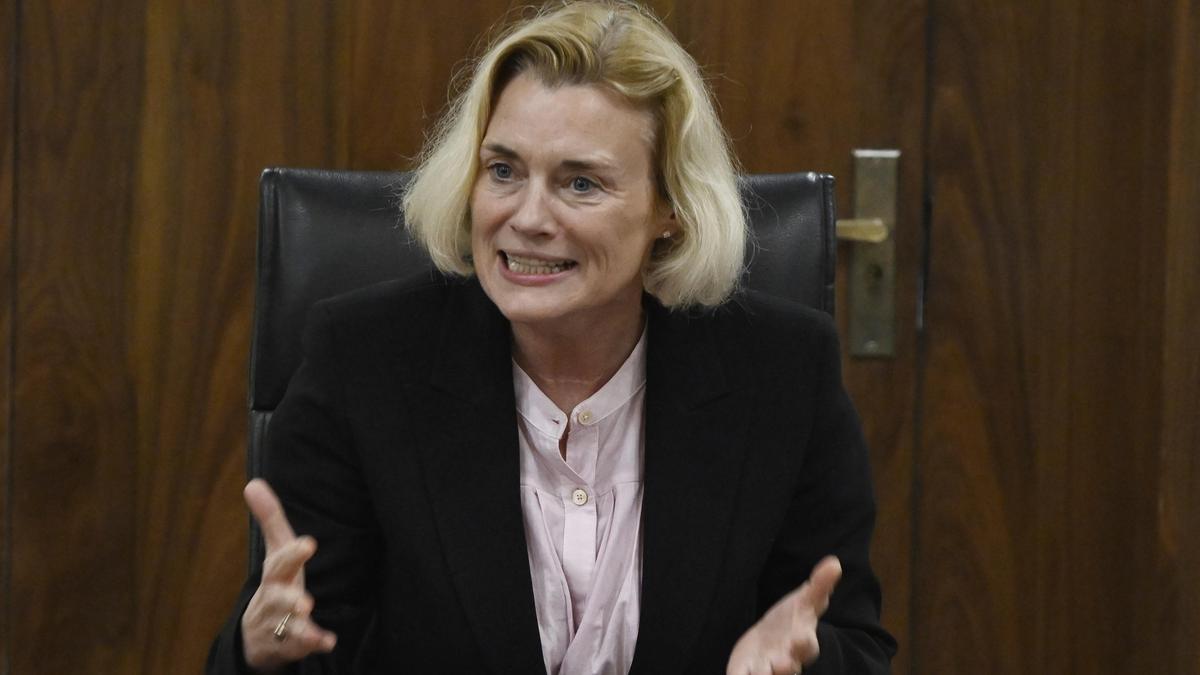
As Prime Minister Narendra Modi arrived in Oslo on Monday (May 18, 2026) for a two-day visit where he will hold bilateral talks and then meet with leaders of Sweden, Norway, Iceland, Finland and Denmark for the 3rd India-Nordic summit, conflicts in Ukraine and Iran and their economic impact will be on the agenda.
In an interview to The Hindu, Norway’s Ambassador to India May-Elin Stener says Norway will also discuss more gas and oil supplies to India, even as U.S. sanction waivers on Russian oil lapsed over the weekend, indicating India may have to reduce its intake.

It has been 43 years since the last Indian Prime Minister visited Norway for a bilateral visit. Tell me about the significance of Prime Minister Narendra Modi’s visit, and what are some of the big outcomes that you are expecting.

Well, we are also greatly looking forward to Prime Minister Modi’s visit here to Oslo for the third India-Nordic Summit. The last one was in Copenhagen (Denmark) four years ago (2022). The world has changed a lot since then. So, all five Nordic countries are really looking forward to discussing geopolitical issues with the leader of the [world’s] most populous country, and there will also be a lot of discussions — on climate, on the green future, sustainability and how we look forward, how we work closely together as democracies.
How do you see the conflicts in Ukraine and Iran play out in the bilateral conversations, and are you expecting a concrete sort of outcomes in terms of statements on both the conflicts?
Well, when Prime Minister Modi lands in Oslo, the first day will be a bilateral visit, and these issues that you are mentioning, they will for sure be discussed and I am also expecting that there will be statements on these issues. The full-scale Russian invasion of Ukraine is of course a crucial issue for Norway because we are also a neighbouring country of Russia, and the conflict in the Middle East affects us all, and as you were saying, it affects our energy security. Norway, is an energy superpower. We are a small country, but we are a great deliverer of oil and gas to Europe, and we will also be looking at some discussions on how we can deliver more gas to India.
You’ve already had one delivery last week. Are you seeing a greater conversation between India and Norway when it comes to energy?
We are discussing more and more, what we can do together on energy, and we are expecting also several business-to-business MoUs on the energy side [during the visit]. Last week, there was a big LNG delivery to India, and that is part of a 15-year deal [signed] last year by our biggest energy company, Equinor (and Deepak Fertilizers and Petrochemicals Corp-DFCPL) They will continue to deliver LNG to India, which will also power fertiliser production.
As Norway speaks about energy supplies to India, are you also hoping that India will now reduce its energy intake. India’s largest supplier right now is Russia. As far as the U.S. is concerned, their sanction waivers on Russian oil lapsed just this weekend. Are you expecting India to shift its position at all?
A: Well, we will discuss these issues with India, and of course we also have an understanding of the needs of the fastest-growing big economy in the world. So, these issues will definitely be discussed, and then exactly what will be the result that I cannot say now.
(The reporter is in Norway at the invitation of the Norwegian Ministry of Foreign Affairs to cover the India-Nordic Summit)