
 By Mukesh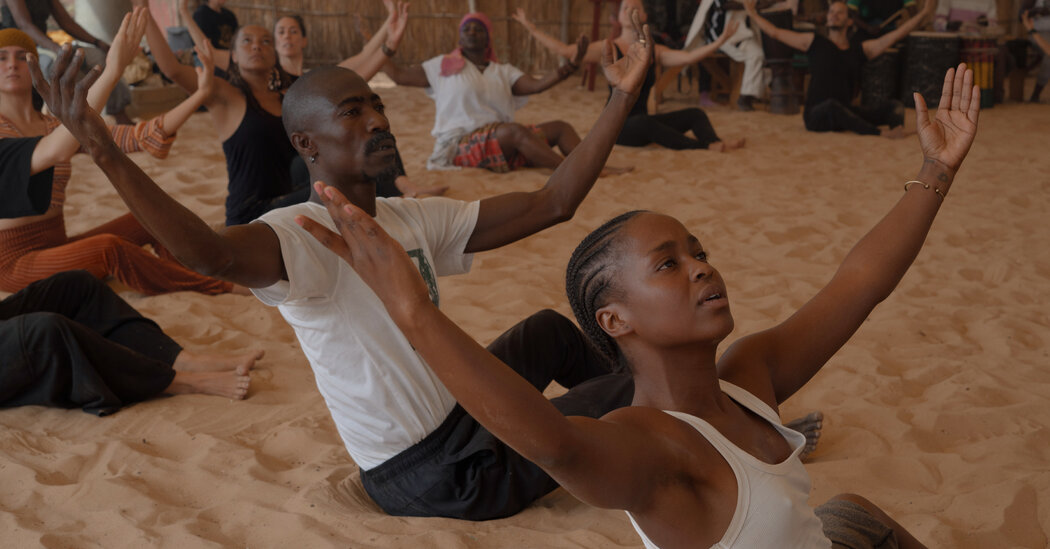
Toubab Dialao came to the rescue. This small fishing village was already an unlikely haven for artists: In the 1970s, the Haitian artist Gérard Chenet, a political exile, had settled in the area and built a hybrid art center, Sobo Badè, which boasts a theater and space for artist residencies, as well as a hotel and restaurant.
“Step by step, my father brought a lot of international artists,” Ibrahima Jacques Chenet, Chenet’s son, said at Sobo Badè. Some stayed and opened other art spaces, earning Toubab Dialao a reputation as a cultural village, Chenet said.
After holding some intensives at Sobo Badè, Acogny and Vogt looked for a space of their own. Acogny sold a small apartment she owned in Paris and Vogt added his savings to secure the grounds of the École des Sables and build the sand studio. Yet developing the school further, and making it financially viable, proved daunting.
“We would hold workshops with dancers from 25 African countries,” Vogt said, “but we had to find ways to cover the costs, because African dancers often don’t have the money to pay for training.”
In the absence of funding from Senegal’s ministry of culture, help has mostly come from European and American foundations, as well as the European Union; the luxury brand Chanel has been a partner for the past two years. Over the years, the school was able to build bungalows to house students and artists on site, as well as a second studio. But the lack of resources directed to culture on the African continent is an issue for artists, Acogny said. (Earlier this week, the budget for the African Dance Biennial, set to open on April 29, was still around $47,000 short, according to Vogt.)