
 By Mukesh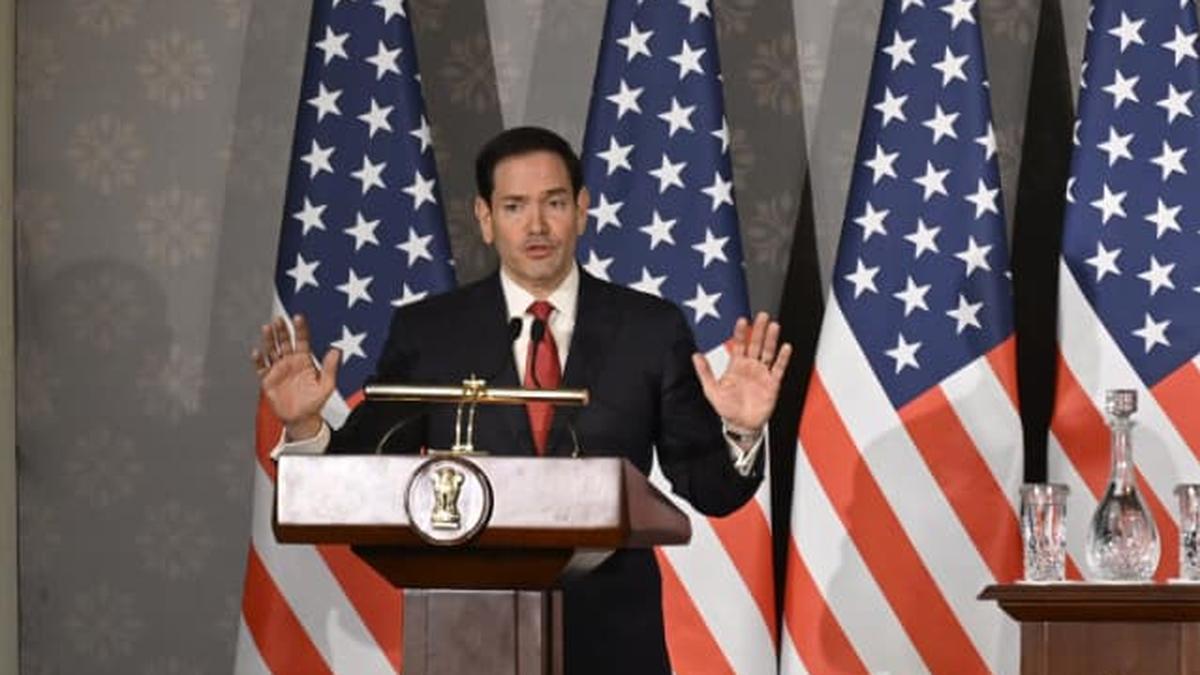
U.S. Secretary of State Marco Rubio on Sunday (May 24, 2026) described the United States as a “welcoming country” and termed the racist comments made against Indians as the actions of “stupid” people.
Addressing a joint press conference with External Affairs Minister S Jaishankar in New Delhi, Mr. Rubio stated that he takes such comments very seriously.
Marco Rubio in India LIVE updates – May 24, 2026
On being asked about racist remarks against Indians in the U.S., he responded: “I don’t know how to address that, but I’ll take that very seriously about the comments. Look, I’m sure that there are people who have made comments online and other places because every country in the world has stupid people. I’m sure there are stupid people here. There are stupid people in the United States who make dumb comments all the time.”
“I don’t know what else to tell you other than that the United States is a very welcoming country. Our nation has been enriched by people who come to our country, have come from all over the world, have become Americans, have assimilated into our way of life and have contributed greatly. So, that’s all I can comment on that in regard to your point,” he added.
Highlighting the contribution of the Indian community in the U.S. economy, Mr. Rubio said: “Over 20 billion dollars have been invested in the U.S. economy by Indian companies. We want that number to continue to increase, and obviously, the expertise as well that they’ve provided to our economy has been very, very valuable.”

Modernisation of U.S. migration system ‘not India-specific’
Mr. Rubio also stated that the U.S. is modernising its migration system and changes in immigration policy were applied across the world and “not India-specific.”
On concerns about the recent changes in J1 visa, F1, H-1B visa and his message to Indians in this regard, Mr. Rubio said: “The changes that are happening now, or the modernisation of our migration system into the United States, is not focused, is not India-specific. It is global; it’s being applied across the world.”

“We’ve had a migratory crisis in the United States. This is not because of India, but broadly, we had over 20 million people illegally enter the United States over the last few years, and we’ve had to address that challenge. In addition to that challenge, and I think this is true for India, this is true for every country in the world… Everything that you do as a country needs to be in your national interest, and that includes your immigration policy.”
He noted that immigration has enriched the country, but stressed that the system must be adjusted with changing times. “The United States, I believe, is the most welcoming country in the world for immigration. Every single year, a million people roughly become permanent residents of the United States and contribute greatly. My parents entered the United States as permanent residents in 1956 from Cuba and so it’s a process that’s enriched us, but it has to be a process that’s adjusted in every era to the realities of the modern times in which you live, and we are, and it’s long overdue,” he added.

Mr. Rubio further stated that the system that will be implemented after the process will be more efficient and better than the previous system.
“The United States is currently undergoing a process of reforming the system by which we choose how many people come into our country, who comes in, when they come in, etc. Anytime you undertake a reform, anytime you undertake a change in the system by which you admit people, or frankly anytime you undertake a reform in any system, not just on immigration, there are going to be, there’s going to be a period of transition that’s going to create, you know, some friction points and some difficulties and so forth,” he said.
“Ultimately, we think that when this process is in place, once this process has been modernised, and that’s really what it is. We are modernising the U.S. immigration system for the 21st century so that it is an immigration system that’s not just good for America, but it’s also good for the people that are coming,” he added.
“So I just don’t… what I want to clear is that the changes, while they may be having a disproportionate impact on a place like India that provides so many high-skilled workers to the U.S. economy, it is not a system that is targeted at India. It is one that’s being applied globally. But we’re in a period of transition, and like any period of transition, there’s going to be some bumps on that road. But we think ultimately our destination is going to be a better system, a more efficient system, one that works better than the one that we had embraced previously and more sustainable by the way,” he reiterated.